Skip to content
MagnEFi Conference  2022

MagnEFi Conference 2022

MagnEFi Conference 10 – 14 October 2022 – Crete island, Greece

  • Home
  • Programme
  • Registration
  • Travel and location
  • About us…
  • Contact
  • Gallery
  • Home
  • Clare Desplats

Author: Clare Desplats

Registration

Posted on April 21, 2022 By Clare Desplats No Comments on Registration
Uncategorized

Registration

Welcome to the registration page! Please find the registration forms in the following links:

Registration form for invited speakers
Registration form for participants

We are happy to answer to any of your questions! Please feel free to let us know if you have any doubts at the following dedicated e-mail addresses.

  • Informations about the travel/accommodation: travel_info_magnefi@gmail.com
  • Informations for invited speakers: speaker_info_magnefi@gmail.com

Conference programme

Posted on April 21, 2022April 21, 2022 By Clare Desplats No Comments on Conference programme
Programme

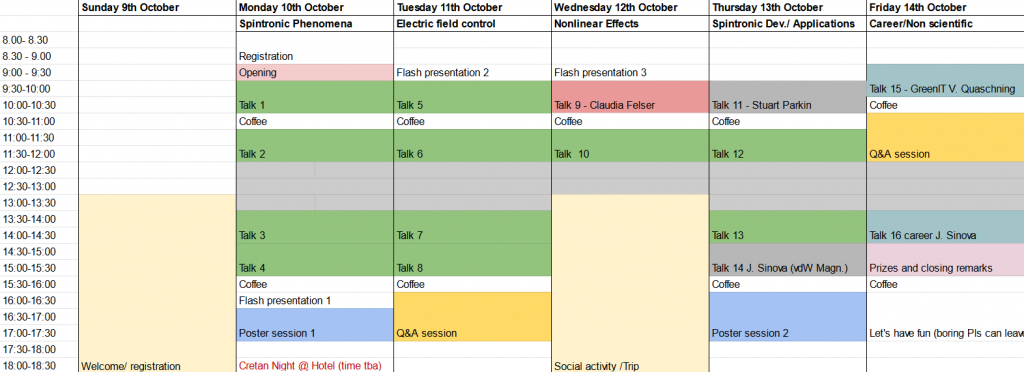
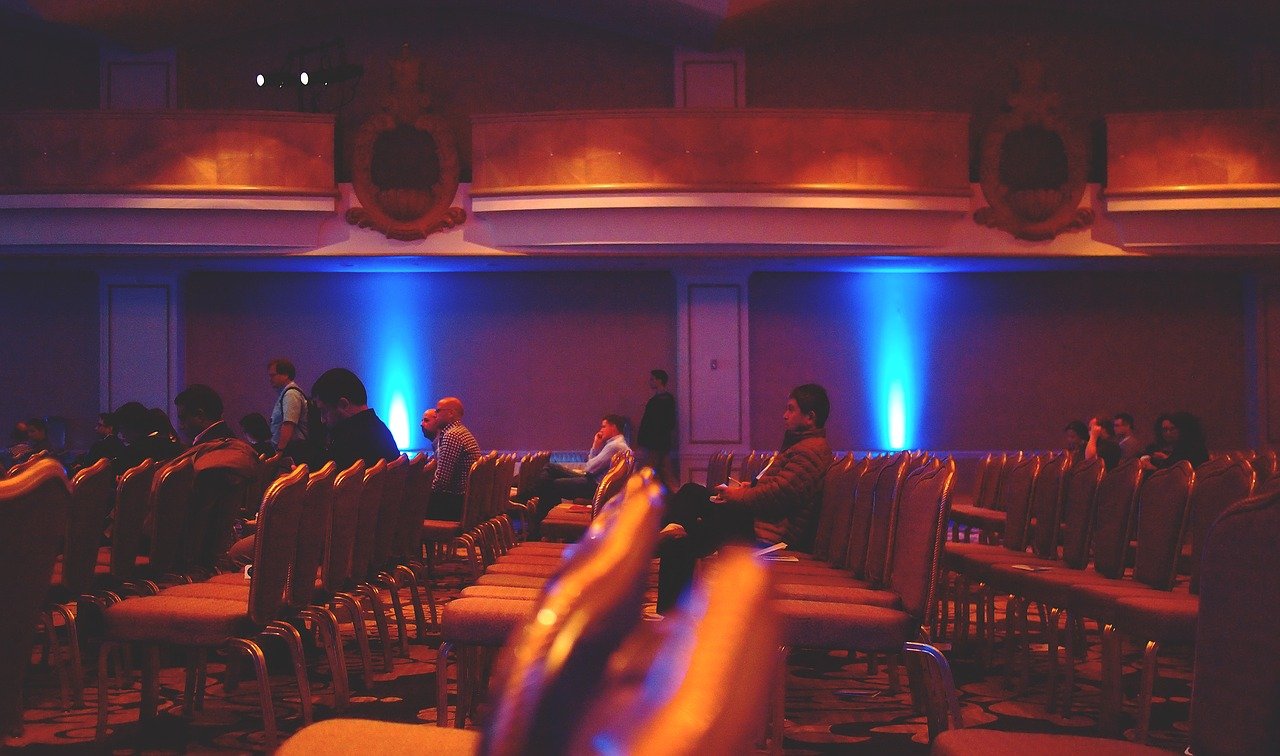
The MAGNEFI2022 conference will take place from the 10th to 14th of October 2022. You will experience 5 days of exciting talks on cutting-edge research about electric field control of magnetism. Every day will be devoted to one subtopic with invited talks from experienced scientists. Additionally, there will be poster and Q&A session to allow for scientific discussions and the establishment of new networks.

The preliminary programme can be found below.

Any questions?

Posted on April 20, 2022April 21, 2022 By Clare Desplats No Comments on Any questions?
Contact

If you have any questions, don’t hesitate to get in touch with us.

Speaker info
You have a question about your talk or poster abstract or you want to know something about the programme? Please send an email to:
speaker_info_magnefi@gmail.com
Travel/ accomodation
You have questions about the accomodation or how to reach the conference location? Please send an email to:
travel_info_magnefi@gmail.com

About us…

Posted on April 9, 2022April 21, 2022 By Clare Desplats No Comments on About us…
Uncategorized

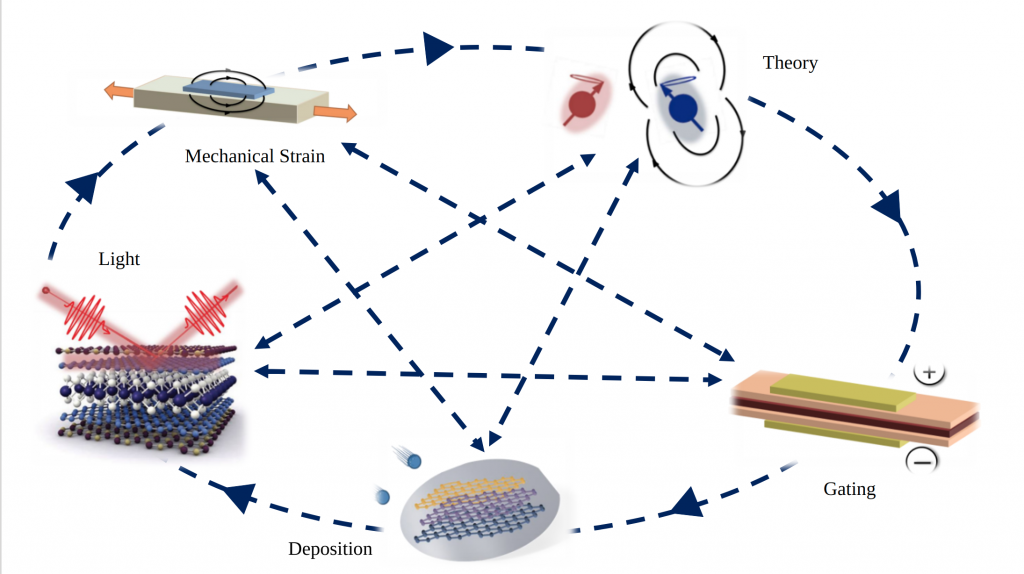
Hello everyone! We are the MagnEFi Network, an International Training Network (ITN) funded by the Marie Skłodowska-Curie Actions programme of the European Commission. We are a network of 15 Students completing their PhD across Europe and we work in the field of Spintronics: the broader goal of the project is to study the effects of the electric fields on magnetic interface phenomena. Each one of us specializes is in more focused sub-areas of the subject such as: strain, gating or light. We work in separate research facilities, but we move around very often to collaborate and share expertise on the different topics of our projects.

Material Growth:

This part of the consortium involves two industrial partners, Singulus and Spin- Ion Technologies. The aim is to develop and deposit high quality material stacks for electric field manipulation experiments. Partners are provided with layers sputtered with the most advanced tools in the world. Moreover, the magnetic properties of magnetic thin films will be tailored using ion irradiation induced interface engineering.

Theory:

INRIM and Usal are the two institutions that will complement the experimental projects in the network with theoretical modelling of the
effects of electric field in magnetic thin layers. This will be done with the help of micromagnetic simulations. Gate induced charge accumulation, optical effects and piezoelectric strain will be analysed.

Strain:

A promising route to low-power nanomagnetic data storage and computing devices is to apply a voltage to a piezoelectric material that exerts strain on a magnetic thin film and manipulates its properties via magnetoelasticity. The impact of the strain, intrinsically present in thin crystalline materials, is of fundamental importance for
performances of devices like magneto-resistive sensors based on Domain Wall motion.

Light:

Controlling magnetism with light
(femtoseconds laser pulses) could pave the way towards integrating photonics with nano-magnetism for future data buffering. One possibility is to implement all optical switching in nanowires structured on top of a photonic waveguide, which is considered a unique building block for future
magneto-photonic integrated circuits.

Gating:

A promising route to low-power nanomagnetic data storage and
computing devices is to apply a voltage to a piezoelectric material that
exerts strain on a magnetic thin film and manipulates its properties via
magnetoelasticity. The impact of the strain, intrinsically present in
thin crystalline materials, is of fundamental importance for
performances of devices like magneto resistive sensors based on
Domain Wall motion.

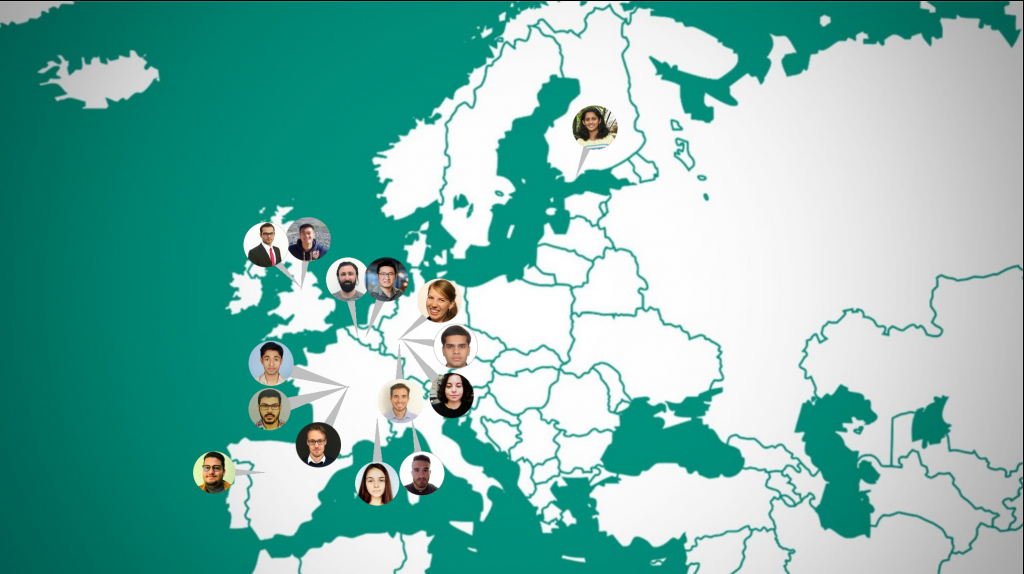
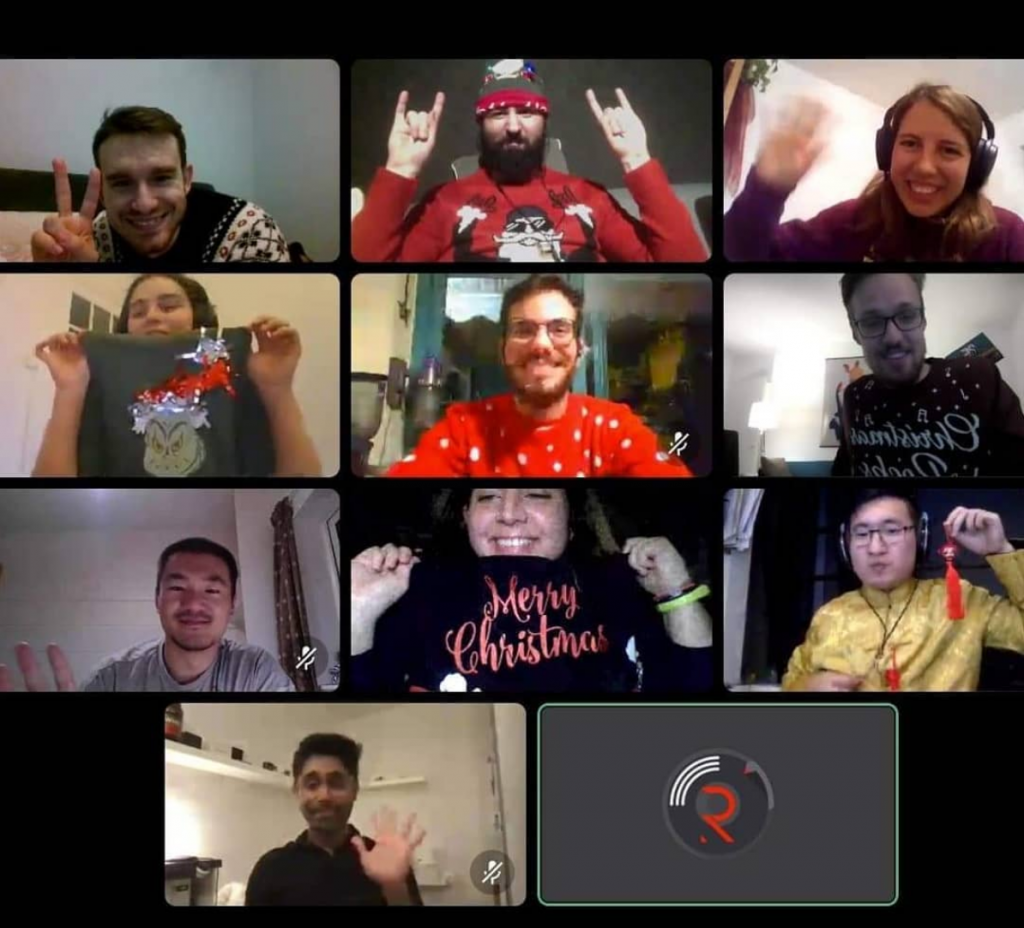
We are all scattered across Europe in 6 universities , 2 research centers and 3 science and technology industrial partners. We had a bit of a rough start with the pandemic and all! We didn’t let this get in our way (we even organized an online Christmas party!) and managed to develop a very close-knit team of highly motivated young scientists. More importantly perhaps, this experience has allowed us to discover many new great friends! 

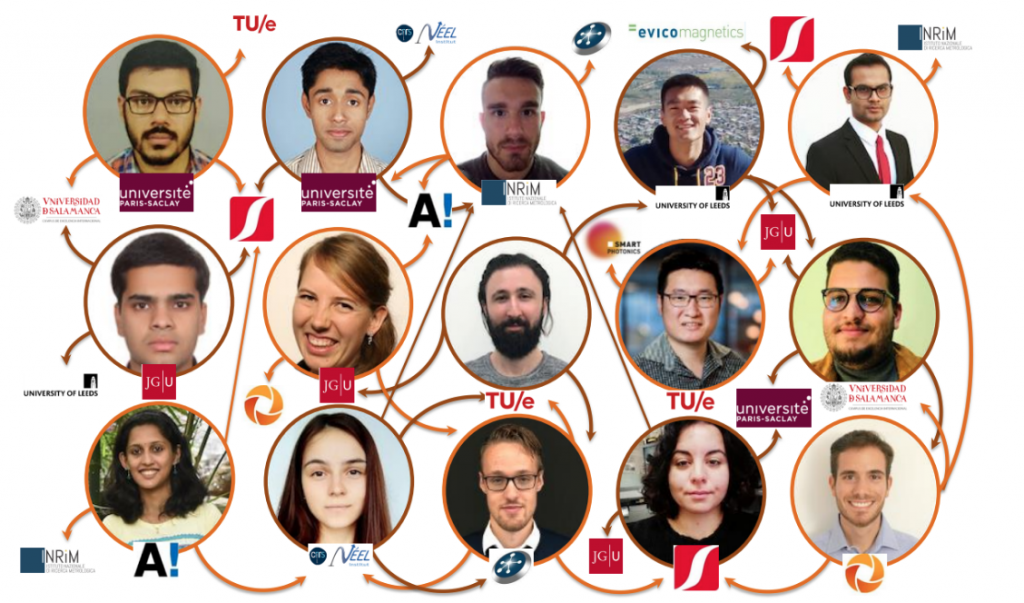
The ESRS: From top left to bottom right Subhajit Roy,Rohit Pachat ,Adriano di Pietro,Jintao Shuai,Md Golam Hafiz,Adithya Rajan,Beatrice Bednarz,Adrien Petrillo,Pingzhi Li,Mouad Fattouhi,Sreeveni Mozhikunnath Das,Cristina Balan,Gyan van der Jagt,Mandy Syskaki,Giovanni Masciocchi
We are scattered all across Europe!
Our online Christmas party! We even had a contest for the best festive Holiday… Pinghzy won

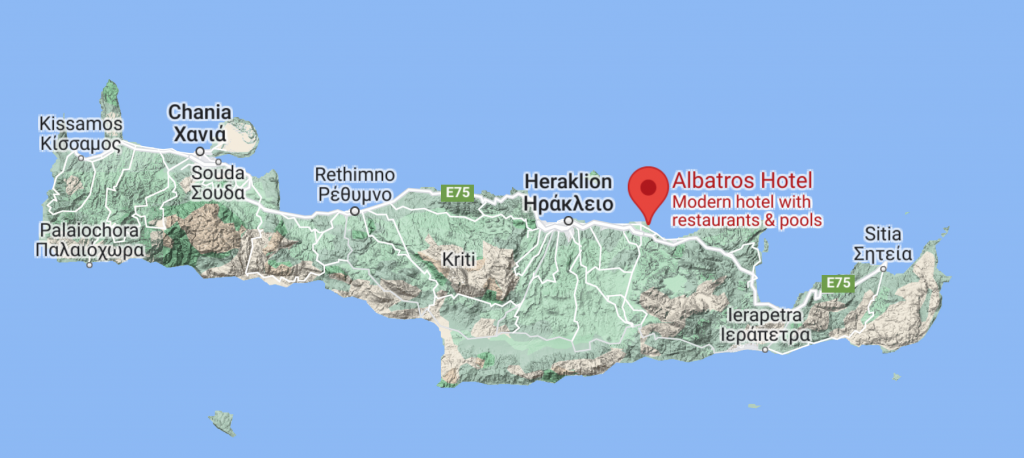
As we near the end of our project, in the spirit of what has become a tradition of these ITN’s, we decided to organize a Conference event in Creete (Greece). We want to celebrate the end of these years of hard work by coming all together and discussing science with many of the leading experts of this sprawling field of physics. The conference is going to be held in Crete, at the Albatros Hotel located in the beautiful Hersonissos between the 10th and the 14th of October 2022. We are going to have many affirmed and emerging scientist presenting exciting talks. At the same time, we plan to invite many talented young scientists to participate with posters and flash presentations about their work.

If you want to know more about us, please go find us at our social media accounts!

The Island and the Village

Posted on April 8, 2022April 20, 2022 By Clare Desplats
Travel and location

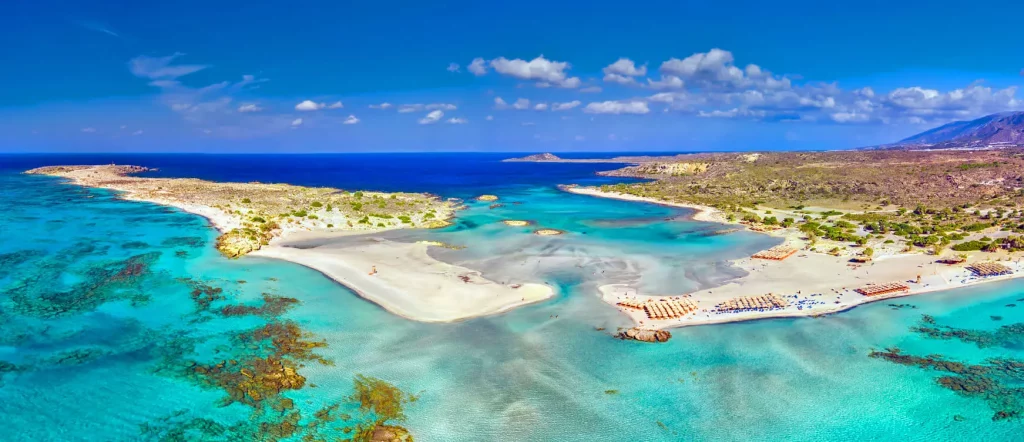
Crete is the largest island in Greece, and one of the largest of the whole Mediterranean sea. Here, you can admire the remnants of brilliant civilizations, explore glorious beaches and impressive mountainscapes.

Being a vibrant location, full of history and good weather, makes Crete a perfect location for international scientific, conferences. Crete offers a wide range of tourist attractions. Heraklion, the city that flourished under a multicultural influence throughout the centuries has a plethora of Byzantine, Venetian and Ottoman structures to look out for. Or Agios Nikolaos, the capital town of Lassithi with bottomless salt lake Voulismeni dominating the area. Delightful beaches and restaurants with a cozy atmosphere make an ideal place to relax during discovering the corners of this pictoresque Island. 

The village where te conference will be host is Chersonissos in the north part of Crete, and is located directly on the coast.

For more: visitgreece.gr/islands/crete/

Venue and Accomodation

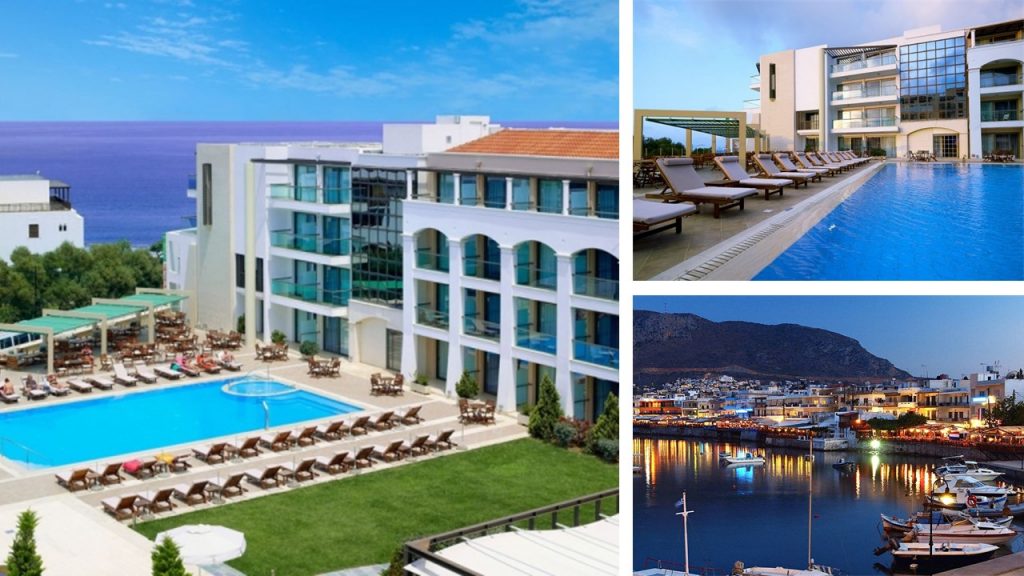
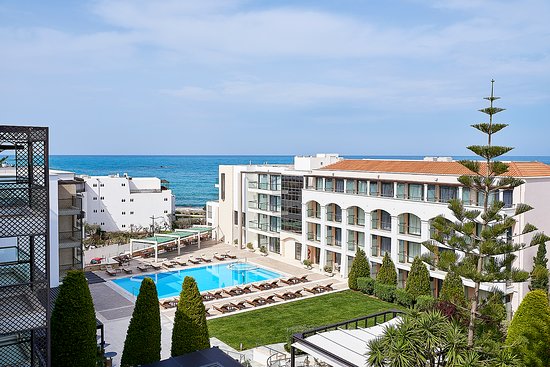
The MagnEFi conference 2022 will take place at the Albatros SPA & Resort Hotel in Chersonissos (1 Δαιδάλου Street, Chersonisos 700 14, Greece). The hotel is ideally located away from the hustle and bustle of the centre of the town, only 20m away from one of Crete’s popular beaches. Nevertheless, the world famous town of Hersonissos, known for its nightlife entertainment, is just a 5-minute walk.

Accomodation is not provided to the participants, but there are many excellent hotels close to the conference venue. Invited speakers will be provided accommodation.

A select number of rooms will be available in the conference hotel. This is undoubtely convenient since it willl give the participants and the speakers the oportunity for discussions and networking. Moreover this means that communting is not needed. More information to follow.

Albatros Hotel and the village of Chersonissos. More at albatros.gr/

Travel information

The easiest way to get to Crete from any place around the globe is, of course, by plane.The main airport is the Candia-Nikos Kazantzakis Airport of Heraklion, the biggest town on the Island. A second airport is the one of Chania (CHQ, https://www.chania-airport.com/). Heraklion airport is the closest to the hotel, so we advise traveling to this airport if you have the option. 

As the airport is just 20km from the conference venue, we suggest to take a Taxi directly to the Hotel (cost around 30-40€, up to 4 passengers). You can book your transfer in advance using the following link: https://www.suntransfers.com/crete-heraklion-airport.

Busses between the airport and Chersonissos travel every hour. From Heraklion airport, the journey takes roughly 40 minutes. The bus stop closest to the hotel is “Chersonissos”. You can book in advance (although not advised / necessary) here: https://www.ktelherlas.gr/en/. From the bus stop, it is about a 30-minute walk to the hotel (Google maps link: https://tinyurl.com/2n6axmvf). Regular Ticket: 3,10 Euros.

Car rental is relatively easy and cheap on the island. Various options are available, like the following: Cheap Car Hire Heraklion Airport – Rentalcars.com.

Visa and practical informations

Crete is Greece’s biggest island. It is a very touristic place and overall considered very safe.

Even though the event is “all-inclusive” (accommodation + meals included), we advise bringing some cash in case you want to make small purchases. Credit cards are accepted (mostly VISA and Mastercard), although there is often a minimum transaction amount below which you can only use cash.

The average temperature on Crete in October is roughly 20°C.

Covid -19 Information

The most updated information related to Corona and travel in Greece can be found here (in English): Protocol for Arrivals in Greece – travel.gov.gr

This section will be updated with more relevant information when applicable.

Visa Information

A visa may be required when you enter Greece. Please visit https://www.mfa.gr/en/index.html for more information.

Visa rules differ per country, but as a general rule, once a Schengen visa application is submitted to the Consulate, a decision is taken by the Consulate within 15 calendar days. This period may be extended up to 30 days or 60 days.

When should I apply for a visa?

Applications can be lodged no more than six (6) months before the start of the intended trip. It is advisable to lodge an application at least 15 calendar days before the intended visit.

However, it is also recommended that you lodge the visa application taking into account the national holidays of the Schengen State of destination and the country where you apply for the visa.

Holders of a multiple-entry visa (valid for a period of at least six months) may lodge the application for a new visa before the expiry of that visa.

To request a letter of invitation from the Conference for Visa purposes: contact the organizers providing your personal details including the institution you belong to.

  • Home
  • Programme
  • Registration
  • Travel and location
  • About us…
  • Contact
  • Gallery
  • Home
  • Programme
  • Registration
  • Travel and location
  • About us…
  • Contact
  • Gallery

This project has received funding from the European Union’s Horizon 2020 research and innovation programme under the Marie Skłodowska-Curie grant agreement No. 860060 “Magnetism and the effect of Electric Field” (MagnEFi). Copyright © 2022 MagnEFi Conference 2022.

Theme: Oceanly by ScriptsTown